

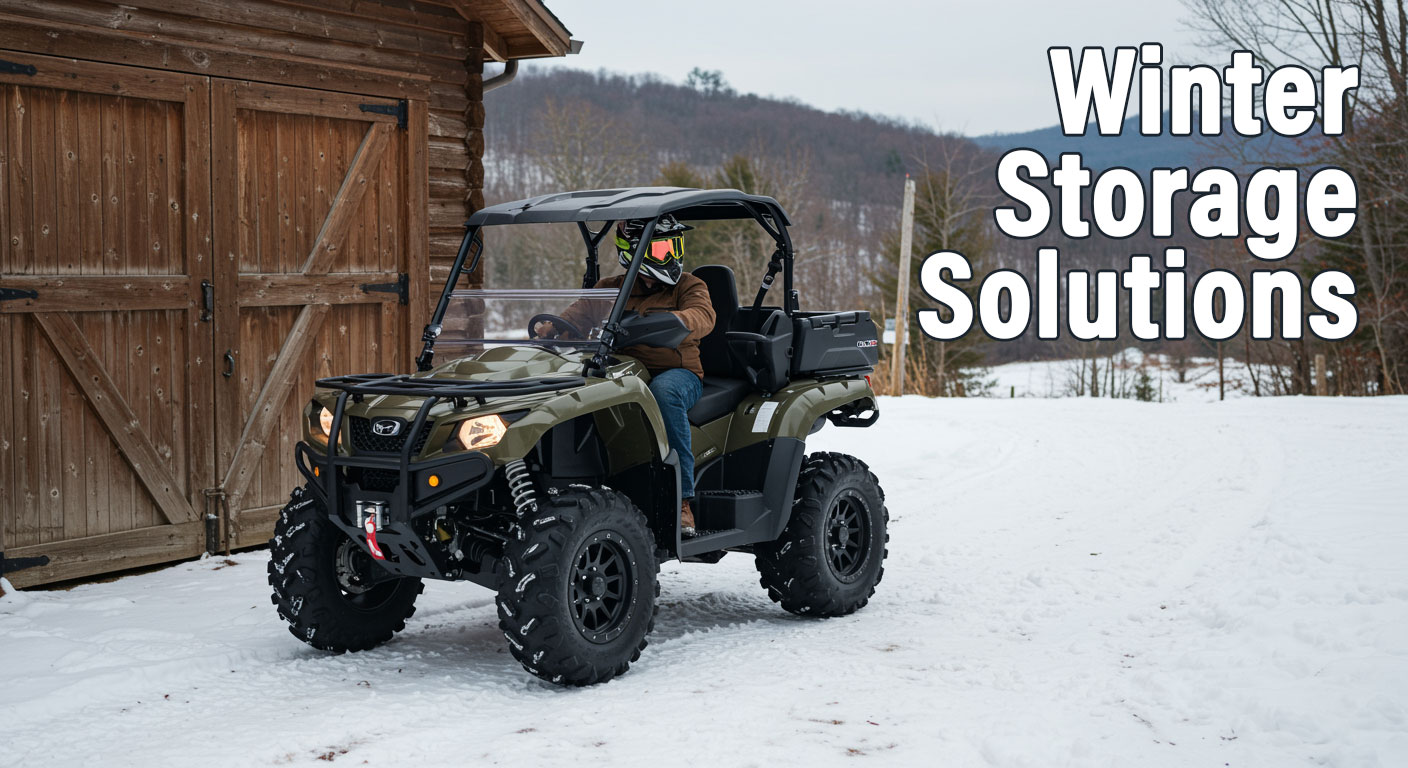
As winter approaches in Western North Carolina, many riders face the challenging task of properly storing their motorcycles and ATVs for the season. Proper winter storage isn’t just about finding a convenient place to park your vehicle—it’s a comprehensive process that protects your investment, prevents costly damage, and ensures your powersports vehicle is ready to ride when spring arrives.
Protect Your Powersports Investment During Western North Carolina’s Off-Season
At Waynesville Cycle Center, our service technicians have developed proven winterization protocols specifically designed for Western North Carolina’s unique climate conditions. This comprehensive guide walks you through professional-grade storage techniques that will protect your motorcycle or ATV during the off-season months.
Why Proper Winter Storage Matters in Western NC
Western North Carolina’s winter climate presents specific challenges for powersports storage that many riders underestimate.
Climate Considerations for Mountain Storage
Our region’s winter conditions create unique storage concerns:
- Temperature fluctuations: Daily swings that accelerate condensation formation
- Higher humidity levels: Promoting corrosion and mildew development
- Extended storage periods: Often 3-4 months for many seasonal riders
- Variable freeze/thaw cycles: Stressing systems and components
These conditions can cause significant damage if proper storage procedures aren’t followed. From fuel system deterioration to battery sulfation, what happens during those winter months greatly impacts your vehicle’s condition, performance, and longevity.
Common Winter Storage Mistakes
Avoiding these errors will save you time and money:
- Improper fuel treatment: Leading to carburetor/injector damage
- Inadequate battery maintenance: The #1 cause of spring startup failures
- Leaving vehicles uncovered: Exposing to dust, debris, and moisture
- Incorrect tire storage: Creating flat spots and sidewall damage
- Neglecting pest protection: Inviting rodents to create expensive damage
Each of these mistakes can lead to costly repairs and frustrating delays when riding season returns. By following proper storage protocols, you’ll avoid these common pitfalls and extend your vehicle’s service life.
Step-by-Step Winter Storage Procedure
Follow this comprehensive process for optimal winter protection of your powersports vehicle.
1. Thorough Cleaning and Preparation
Starting with a completely clean vehicle is essential:
- Wash thoroughly: Remove all dirt, road grime, and corrosive materials
- Focus on hidden areas: Clean underneath fenders, behind panels, and between fins
- Dry completely: Use compressed air for hard-to-reach areas
- Apply protective products: Treat appropriate surfaces with quality protectants
- Final inspection: Check for existing issues requiring attention before storage
This critical first step removes contaminants that could damage finishes and components during storage. Pay special attention to areas where moisture might collect, as these are prime spots for corrosion development.
2. Fuel System Protection
Preventing ethanol damage and varnish formation:
- Add quality fuel stabilizer: Use products specifically designed for ethanol-blended fuels
- Fill the tank completely: Minimizing condensation space in the tank
- Run the engine: Circulating treated fuel through the entire system
- Carburetor considerations: Drain float bowls on carbureted models
- Fuel injection care: Ensure the system is properly pressurized before shutdown
Modern ethanol-blended fuels begin deteriorating within 30 days, making this step absolutely critical. For storage beyond 3-4 months, consider complete fuel system draining for carbureted vehicles.
3. Oil and Fluid Management
Protecting internal components from corrosion:
- Change engine oil: Remove acidic contaminants before storage
- Replace filter: Starting fresh with clean filtration
- Check coolant: Verify proper antifreeze protection and inhibitor levels
- Inspect brake fluid: Address any moisture contamination issues
- Lubricate control cables: Prevent seizing and corrosion
Fresh oil provides superior internal protection during storage, while old oil contains acids and moisture that can damage engine components. For maximum protection, consider synthetic oil with enhanced corrosion inhibitors.
4. Engine Internal Protection
Preventing cylinder wall and valve train corrosion:
- Apply fogging oil: Protecting cylinder walls and valve components
- Remove spark plugs: Allowing direct access to cylinders (where appropriate)
- Rotate engine: Distributing oil to upper engine components
- Replace spark plugs: Installing with proper torque
- Seal exhaust and intake: Preventing moisture entry
This specialized procedure creates a protective barrier on internal engine components most vulnerable to corrosion. Our service department can perform this critical step using professional-grade materials and techniques.
5. Battery Preservation
Preventing power system failure—the most common storage problem:
- Remove the battery: Disconnecting negative terminal first
- Clean terminals: Removing any corrosion or deposits
- Check fluid levels: Topping off conventional batteries if necessary
- Apply terminal protectant: Preventing oxidation during storage
- Store properly: Keeping in a climate-controlled environment
- Maintain charge: Using a quality maintenance charger
Battery failure is the leading cause of spring startup issues. A quality maintenance charger (not a standard trickle charger) is essential for long-term battery health, as it prevents damaging sulfation while avoiding overcharging.
6. Tire and Suspension Protection
Preventing flat spots and structural damage:
- Clean thoroughly: Removing brake dust and road chemicals
- Increase pressure slightly: Adding 5-10 PSI above normal operating pressure
- Elevate vehicle: Using stands at proper support points
- Relieve suspension: Taking weight off springs and seals
- Rotate periodically: If elevation isn’t possible
For motorcycles, quality front and rear stands provide optimal support. For ATVs, jack stands at the frame rails or suspension mounting points work well. This prevents tire flat spots while relieving stress on suspension components.
7. External Protection Measures
Shielding from dust, moisture, and UV damage:
- Apply quality wax: Creating a protective barrier on painted surfaces
- Treat vinyl/leather: Using appropriate conditioners for soft materials
- Coat exposed metal: Protecting vulnerable components
- Cover properly: Using breathable, vehicle-specific covers
- Maintain airflow: Preventing moisture trapping under covers
The right cover makes a significant difference in storage outcomes. For indoor storage, choose breathable materials that prevent condensation. For outdoor storage (not recommended), select waterproof, UV-resistant covers designed specifically for powersports vehicles.
8. Storage Environment Selection
Choosing the optimal location for winter storage:
- Indoor considerations: Temperature, humidity, and ventilation
- Garage preparation: Concrete sealing and climate control
- Alternative options: Storage units, outbuildings, or covered porches
- Professional storage: Facility selection criteria
- Security concerns: Theft and vandalism prevention
The ideal storage environment maintains steady, moderate temperature with controlled humidity and minimal exposure to the elements. For Western North Carolina, heated or climate-controlled spaces provide significant advantages over unregulated environments.
9. Rodent and Pest Prevention
Avoiding potentially extensive damage:
- Seal openings: Blocking exhaust, intake, and other entry points
- Remove attractants: Eliminating food sources and nesting materials
- Deploy deterrents: Using commercial repellents and deterrent devices
- Inspect regularly: Checking for signs of pest activity
- Set traps: Placing strategically around the storage area
In Western NC’s rural areas, rodent damage is a significant risk during winter storage. Mice and other small animals seek warm shelter and can cause extensive damage to wiring, upholstery, and air boxes. Preventative measures are far more effective than dealing with the aftermath of an infestation.
For comprehensive protection against winter storage damage, consider our professional winterization service. Our factory-trained technicians at (828) 452-5831 can prepare your vehicle for optimal winter protection.
Storage Options for Western NC Riders
Choosing the right storage approach depends on your specific situation and resources.
Home Storage Solutions
Making the most of available space:
- Garage optimization: Efficient use of limited space
- Shed considerations: Weatherproofing and security upgrades
- Basement options: Access and ventilation requirements
- Covered outdoor storage: Last-resort solutions with enhanced protection
- Multi-vehicle approaches: Organizing multiple powersports vehicles
Even with limited space, creative solutions like vertical storage systems, wall-mounted racks, and efficient arrangement can accommodate most powersports vehicles in existing home structures.
Commercial Storage Alternatives
When home storage isn’t feasible:
- Dedicated powersports facilities: Specialized environment and services
- Self-storage units: Climate-controlled vs. standard options
- Dealer storage programs: Professional oversight and maintenance
- Shared arrangements: Splitting costs with riding companions
- Seasonal rental considerations: Short-term versus annual contracts
When evaluating commercial options, prioritize security, climate control, and access policies. Some facilities offer additional services like battery maintenance and periodic starting that may justify premium pricing.
Creating Optimal Conditions
Enhancing your existing storage environment:
- Insulation improvements: Moderating temperature extremes
- Humidity control: Dehumidifiers and desiccant options
- Ventilation solutions: Preventing condensation buildup
- Ground moisture barriers: Protecting from concrete-transmitted moisture
- Temperature monitoring: Awareness of storage conditions
Simple modifications can significantly improve less-than-ideal storage spaces. Concrete floors transmit significant moisture, so barriers between your vehicle and the floor provide meaningful protection even in otherwise good environments.
Seasonal Maintenance During Storage Periods
Even properly stored vehicles benefit from periodic attention during winter months.
Monthly Checkup Routine
Regular monitoring prevents surprises:
- Battery status verification: Checking charge levels and connections
- Tire pressure inspection: Maintaining proper inflation
- Pest check: Looking for evidence of unwanted visitors
- Cover adjustment: Ensuring proper placement and ventilation
- Visual inspection: Identifying any developing issues
These quick visits provide opportunities to address minor issues before they become major problems. They also help maintain your connection to your vehicle during off-season months.
Mid-Winter Intervention
For extended storage periods:
- Engine warm-up considerations: Weighing benefits against risks
- Drivetrain rotation: Lubricating internal components
- Control operation: Exercising clutch, brake, and throttle
- Moving slightly: Changing tire contact points
- Refreshing fuel stabilizer: For storage beyond 4 months
The decision to start your vehicle during storage is controversial. While it can redistribute fluids, it also creates condensation that may not fully evaporate. For most Western NC storage situations, we recommend against mid-winter starting unless the engine can reach full operating temperature and run for at least 15-20 minutes.
Documentation and Planning
Preparing for spring recommissioning:
- Storage procedure records: Noting what was done before storage
- Condition documentation: Recording pre-storage state
- Maintenance tracking: Identifying service needed at season start
- Parts ordering: Securing components during off-season deals
- Spring startup checklist: Creating a recommissioning plan
This organization ensures nothing is forgotten when riding season returns. Winter is also an excellent time to research and order upgrades or maintenance parts, often at better prices than during peak season.
Special Considerations for Different Vehicle Types
Storage procedures vary slightly by vehicle type and riding discipline.
Street Motorcycle Storage
Specific needs for road bikes:
- Fuel system concerns: Modern fuel injection considerations
- Chrome protection: Preventing finish deterioration
- Brake system care: Avoiding fluid contamination issues
- Drive chain treatment: Preventing rust and corrosion
- Electronic system care: Battery disconnect and ECU considerations
Street motorcycles often have more exposed chrome and polished surfaces requiring special attention before storage. Their complex electronic systems also benefit from specific battery maintenance procedures.
Off-Road Motorcycle Storage
Dirt bike-specific procedures:
- Air filter treatment: Removing and properly storing
- Suspension protection: Preventing seal deterioration
- Expansion chamber care: Internal coating considerations
- Plastic preservation: Preventing UV damage and embrittlement
- Two-stroke specific needs: Upper end lubrication
Dirt bikes benefit from more extensive cleaning before storage, with special attention to hidden mud and debris that can trap moisture against components during winter months.
ATV and UTV Storage
Four-wheeler winterization techniques:
- Belt drive system care: Preventing CVT belt damage
- Differential protection: Proper fluid levels and sealing
- Electrical component sealing: Protecting exposed connections
- Winch maintenance: Preventing wire rope corrosion
- Accessory preparation: Special considerations for add-on components
ATVs and UTVs often have more exposed electrical components and complex drive systems requiring specific protection. Their larger size also creates unique challenges for space-constrained storage situations.
For vehicle-specific storage recommendations tailored to your exact model, contact our service department at (828) 452-5831 for professional guidance.
Spring Recommissioning Process
Proper winter storage simplifies the spring startup process, but a systematic recommissioning procedure ensures trouble-free return to riding.
Pre-Startup Inspection
Before attempting to start:
- Visual examination: Checking for any winter damage or leaks
- Fluid level verification: Oil, coolant, brake fluid, and fuel
- Tire inspection: Checking pressure and condition
- Battery testing: Confirming charge level and installation
- Control operation: Verifying free movement of all controls
This initial assessment identifies any issues that developed during storage before attempting operation. Pay special attention to signs of pest damage or fluid leaks that may have occurred despite preventative measures.
First Start Procedure
Methodical approach to awakening your vehicle:
- Reinstall battery: Connecting positive terminal first
- Remove intake/exhaust plugs: Ensuring all blocks are cleared
- Prime oil system: Building pressure before cranking (where applicable)
- Initial start consideration: Allowing adequate warm-up time
- Operating temperature attainment: Running until fully warm
The first start after storage should be approached patiently, allowing systems to normalize before demanding performance. Watch carefully for proper operation of all systems, particularly oil pressure and charging indicators.
Post-Storage Service
Recommended maintenance after storage:
- Oil and filter change: Removing any contamination from storage
- Cooling system check: Verifying proper operation
- Control adjustment: Fine-tuning cables and hydraulic systems
- Comprehensive inspection: Professional multi-point verification
- Road/trail test: Confirming proper operation under load
Even with perfect storage procedures, a thorough spring service provides peace of mind and catches any issues that might have developed during the off-season.
Frequently Asked Questions About Winter Storage
Should I completely drain the fuel system for winter storage?
Answer: For modern fuel-injected motorcycles and ATVs stored less than 4 months, we recommend a full tank treated with quality stabilizer rather than draining. This prevents internal corrosion and seals the system from moisture intrusion. However, for carbureted vehicles or storage periods beyond 4 months, draining the system (including float bowls) may be preferable.
The ethanol in today’s fuels makes this question more critical than in previous decades—untreated fuel can cause significant damage in as little as 30 days.
Is it necessary to remove the battery during storage?
Answer: Yes, battery removal is strongly recommended for several reasons. First, it allows optimal charging with a quality maintenance charger in a controlled environment. Second, it eliminates parasitic drain from vehicle electronics that can discharge batteries even when switched off. Third, it protects the vehicle’s electrical system should the battery fail or leak during storage. Finally, it allows proper battery rotation to prevent cell stratification. Even with a tender connected, batteries installed in vehicles typically don’t fare as well as those properly stored separately.
Should I start my motorcycle or ATV periodically during winter storage?
Answer: This common practice is generally not recommended unless you can achieve full operating temperature and run time of at least 15-20 minutes. Brief starts create condensation in engines and exhaust systems without allowing sufficient heat to fully evaporate this moisture, potentially causing more harm than good.
The oil film created by proper pre-storage procedures provides better protection than short run cycles. If you must start your vehicle during storage, ensure it reaches full operating temperature and remains there for an extended period.
What’s the best type of cover to use during winter storage?
Answer: For indoor storage, we recommend breathable, motorcycle-specific covers that prevent condensation while protecting from dust and incidental contact. Outdoor storage (though not ideal) requires waterproof, UV-resistant covers specifically designed for powersports vehicles with secure tie-down points and ventilation features to prevent moisture trapping. Generic tarps should be avoided as they trap moisture against surfaces and can cause significant cosmetic damage. Remember that even the best cover is no substitute for proper indoor storage.
How do I prevent mice and other pests from damaging my stored vehicle?
Answer: A multi-layered approach works best: First, seal potential entry points using exhaust plugs, intake blockers, and appropriate covers. Second, eliminate food sources by thoroughly cleaning the vehicle and storage area. Third, deploy commercial rodent repellents around (not on) the vehicle—products containing peppermint oil, cayenne, and other natural deterrents can be effective. Fourth, place appropriate traps in the storage area, checking them regularly. Finally, consider sonic repellent devices if compatible with your storage environment. Regular inspection during storage remains your best defense against pest damage.
Professional Winterization Service at Waynesville Cycle Center
While many riders handle basic winterization themselves, our comprehensive service packages provide peace of mind and professional-grade protection.
Complete Winterization Package
Professional protection for your powersports investment:
- Fuel system treatment: Premium stabilizer with complete circulation
- Oil and filter change: Fresh protection for internal components
- Battery service: Testing, removal, and maintenance setup
- Fogging protection: Internal engine component coating
- Exterior preparation: Cleaning and protective treatments
- Tire and suspension preparation: Proper positioning and pressure
- Comprehensive inspection: Identifying any pre-existing issues
- Detailed documentation: Recording all services performed
Our factory-trained technicians have winterized thousands of vehicles, developing specialized expertise in addressing Western North Carolina’s unique storage challenges.
Storage Facility Options
For those without adequate storage space:
- Secure indoor environments: Protected from elements and theft
- Climate-controlled options: Maintaining optimal temperature and humidity
- Maintenance inclusion: Regular checks during storage period
- Flexible access arrangements: Accommodating unexpected riding opportunities
- Spring recommissioning coordination: Ensuring readiness when needed
Limited storage spaces are available each season on a first-come basis. Contact our service department at (828) 452-5831 for current availability and pricing.
Spring Recommissioning Service
Professional restart after winter storage:
- Complete system check: Verifying all components before operation
- Fluid inspection: Checking levels and condition
- Battery installation: Testing and proper reconnection
- First start supervision: Professional monitoring of critical systems
- Adjustment and verification: Ensuring everything operates correctly
- Test ride evaluation: Confirming proper operation under load
Even with perfect storage, professional recommissioning provides confidence that your vehicle is truly ready for the season’s first ride.
Conclusion: Investing in Protection
Proper winter storage represents a small investment of time and resources that yields significant returns in vehicle longevity, reliability, and value retention. By following these professional-grade procedures, you’ll minimize deterioration during the off-season and maximize enjoyment when spring arrives.
Whether you choose DIY storage using these guidelines or prefer our professional winterization service, the important thing is taking deliberate steps to protect your powersports investment during Western North Carolina’s winter months.
For personalized storage recommendations specific to your vehicle, contact our service department at (828) 452-5831 or visit our contact page to schedule a winterization consultation with our experienced technicians.
Want to learn more? Check out our article on choosing the right tires for your ATV.